
 EN

Distribution and sub-transmission projects rarely fit a catalogue exactly. A site may need a 35 kV transformer at a capacity the standard table does not list, or a tap range that differs from the default steps, or on-load regulation that the standard unit does not offer. This is where the question of a custom 35 kV transformer begins. Yawei states that transformers other than standard specifications are manufactured according to customer request, which means the practical task is not to guess what is possible but to specify the requirement precisely and confirm it technically with the manufacturer. This article sets out the published capacity range of the 35 kV line, the dry-type options, and the tap and regulation considerations that decide whether a given configuration can be delivered as a custom 35 kV transformer.
What "custom" means for a 35 kV transformer
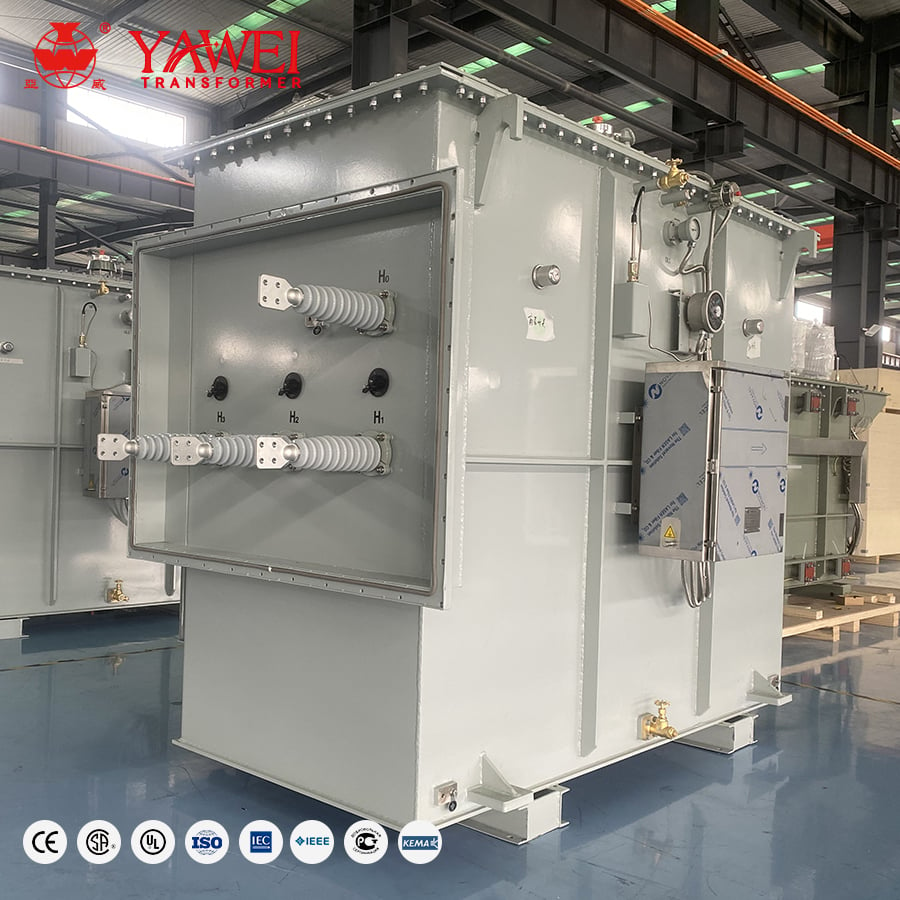
The word custom can cover a wide spectrum. At one end is a minor variation — a non-standard low-voltage combination, an alternative vector group, or a tap range that differs from the catalogue default. At the other end is a substantially re-engineered unit with a different capacity-and-voltage combination or additional regulation equipment. When a buyer asks for a custom 35 kV transformer, the supplier must map the request against its published platform and its engineering capability, and then confirm which elements are routine options and which require a bespoke design.
That distinction matters because it changes both lead time and risk. A configuration that sits within the existing platform can often be quoted quickly, while a genuinely new design needs engineering review and scheduling. The buyer should therefore separate the request into two parts: what is fixed by the published parameters, and what is being asked for beyond them. Presenting both clearly is the fastest route to a reliable quotation for a custom 35 kV transformer.
Capacity range of the standard 35 kV line
The first thing to establish is the published capacity envelope. Yawei's 35 kV oil-immersed distribution and power transformer table runs from about 630 kVA up to 31,500 kVA. Within that range, the smaller end is typically configured for distribution duty and the larger end for power duty, with the tap arrangement and impedance changing accordingly. A buyer seeking a custom 35 kV transformer should first check whether the required capacity already falls inside this published range, because many requests are met by an existing rating rather than a new design.
The published 35 kV oil-immersed data also shows how the tap range varies with capacity: smaller ratings are generally offered with a ±5% off-circuit tap range, while larger ratings move to ±2×2.5%. That pattern is a useful guide when scoping a project, because it indicates where the standard platform sits before any customisation is requested. Where the required capacity is already published, the custom 35 kV transformer discussion shifts from capacity to configuration — voltage combination, vector group, impedance, and cooling.
It is worth being precise about why the published envelope matters. A range that has been manufactured before implies a tested design, established tooling, and known loss performance, so a request inside it can be handled as a variant. A request outside it triggers engineering work that the buyer cannot see and cannot easily price. For oil-immersed 35 kV units, the published ranges for capacity and taps are therefore the natural starting point for any customisation conversation, and stating clearly which published bands the project falls into saves time on both sides.
Dry-type 35 kV options
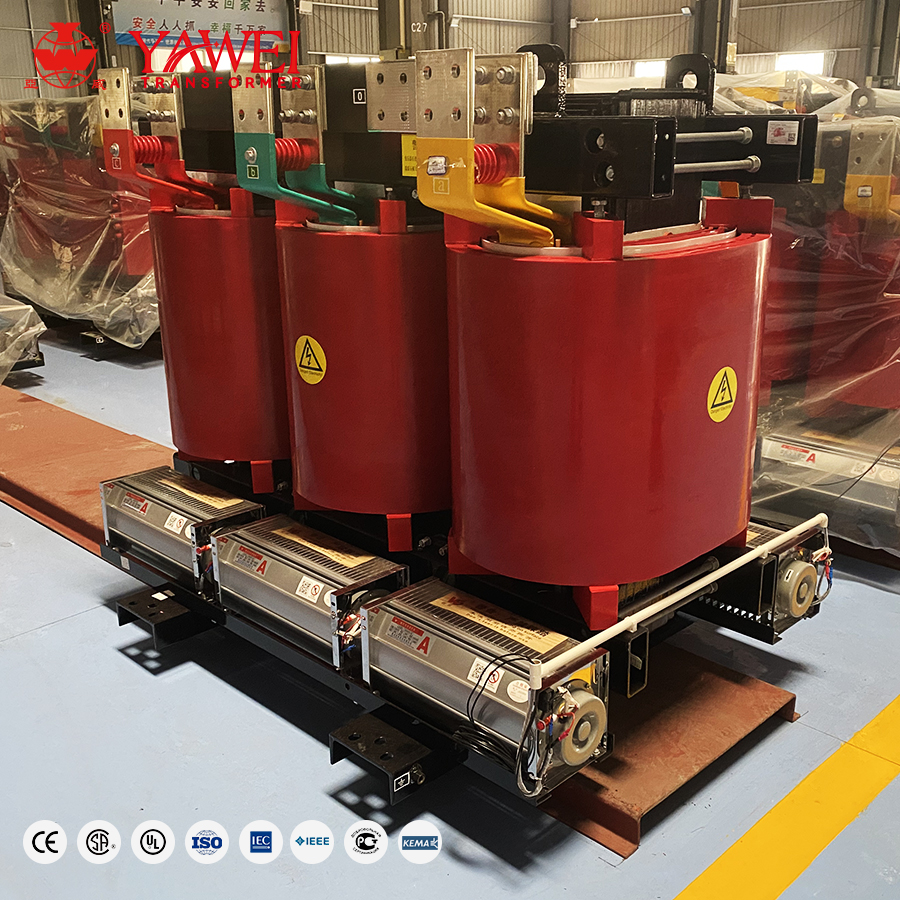
For indoor or fire-sensitive installations, the dry-type platform broadens the choice. Yawei lists a 35 kV dry-type unit with rated power covering the low-kVA range up to a few thousand kVA at 20 kV and 35 kV, and separately lists high-power dry-type units in the 4,000 to 25,000 kVA band at 6 kV and 10 kV. The 35 kV dry-type catalogue also shows off-circuit tap ranges of ±2×2.5% and ±5%. Together these options mean a buyer does not always need a custom 35 kV transformer to obtain 35 kV dry-type performance; the request may be satisfied within the published dry-type range.
The decision between oil-immersed and dry-type is often the first branch in a custom 35 kV transformer enquiry. Dry-type units avoid insulating oil and generally suit indoor locations, while oil-immersed units remain the default for larger outdoor power duty. The buyer should settle this question before specifying taps and regulation, because it constrains the platform on which any custom 35 kV transformer will be based. Choosing the platform first, and the taps second, keeps the enquiry logical and reduces the number of items that genuinely require bespoke engineering.
Non-standard tap ranges and on-load tap changing
Taps and regulation are where most customisation requests concentrate. Yawei's 35 kV oil-immersed catalogue lists off-circuit tap ranges of ±5% for the 630 to 6,300 kVA band and ±2×2.5% for the 8,000 to 31,500 kVA band. A 10 kV oil-immersed on-load tap-changing distribution transformer is also listed in the published range. Off-circuit taps are set while the transformer is de-energised; on-load tap changers (OLTC) allow voltage adjustment under load, which is valuable where the supply voltage fluctuates during operation.
To procure a custom 35 kV transformer with a non-standard tap range or an on-load tap changer, the buyer should state the required tap range, the number of steps, and whether on-load regulation is needed, and then confirm the manufacturer's customisation capability and scheduling. This is the critical point of caution: the availability of on-load tap changers and specific non-standard tap ranges on 35 kV units is not published, so those features must be confirmed technically with the manufacturer rather than assumed.
A precise request makes that confirmation straightforward. Instead of asking for "a custom 35 kV transformer", the buyer should present the nominal voltage ratio, the required tapping range and step size, the regulation mode, and the operating conditions. The manufacturer can then confirm whether the platform supports the request as a variant or whether it needs a bespoke design. In either case, the custom 35 kV transformer should be quoted with the tap specification written explicitly, so there is no ambiguity at the acceptance stage.
What to specify when requesting a custom 35 kV transformer
A complete enquiry should carry the parameters that define the unit and the site. The following framework covers the essentials; every value should be filled with project data and confirmed with the manufacturer.
For configuration details such as impedance, vector group, and cooling that the buyer does not control, the manufacturer's proposed values should be returned with the offer and reviewed. The goal is a custom 35 kV transformer whose specification is fully written down before manufacturing begins. A written parameter set also protects both parties: it is the reference against which the finished unit is tested, so it eliminates the "that is not what we asked for" conversation later.
Application example: a 15 MVA pad-mounted transformer for a US transmission company
Yawei's published project portfolio includes a 15 MVA pad-mounted transformer project for an American transmission company. The case states that, to enter the North American market successfully, the product had to fully comply with United States standards such as UL and IEEE. That example is relevant to customisation because it shows how a distribution-class unit is tailored to meet a specific market's standards and expectations rather than shipped as a generic configuration. The same logic applies to a custom 35 kV transformer: the requirement is usually not a single unusual feature but a coherent set of parameters matched to one project, one grid, and one set of local standards.
What to confirm with the manufacturer
Because the published data does not cover every possible variation, the final step is technical confirmation. Buyers should ask the manufacturer to confirm, in writing, four things: that the requested capacity and voltage combination can be manufactured; that the required tap range and step size are achievable; whether on-load tap changing is available for the requested 35 kV configuration; and what the lead time and scheduling implications are. These confirmations turn an enquiry into a firm basis for a custom 35 kV transformer.
It is equally important to confirm the applicable standards and test evidence for the customised unit, since a non-standard configuration may affect which tests are required or how certification applies. The buyer should request the test regime along with the technical confirmation, so that compliance is settled at the same time as the design. A custom 35 kV transformer that meets every published parameter but lacks agreed test evidence is not yet a complete order.
Summary
A custom 35 kV transformer starts from the published range and moves outward only where a project genuinely requires it. The published 35 kV oil-immersed table runs from about 630 kVA to 31,500 kVA, with ±5% and ±2×2.5% off-circuit tap ranges across the capacity bands; the dry-type platform covers the lower capacity range at 20 kV and 35 kV with its own tap options; and a 10 kV on-load tap-changing distribution transformer is listed. Non-standard tap ranges and on-load tap changers on 35 kV units are not published and must be confirmed with the manufacturer. Specify the configuration completely, request written technical confirmation, and treat the result as a custom 35 kV transformer whose parameters are agreed before manufacturing begins. The published 35 kV oil-immersed transformer range and the dry-type transformer range are the natural place to compare options first.
For the final engineering review, treat custom 35 kV transformer as a project-specific decision term rather than a substitute for the approved datasheet.
Quality Assurance & Standards Notes
- All capacity, voltage, and tap figures in this article are the published 35 kV parameters. Non-standard specifications are manufactured on request, and the availability of on-load tap changers and specific non-standard tap ranges on 35 kV units is not published — every custom request must be confirmed technically with the manufacturer.
- Yawei states that its products can be manufactured to comply with IEC, IEEE, ANSI, CSA, and EN, and lists IEC, UL, TUV, CE, KEMA, and GOST certifications for its 10 kV and 35 kV distribution transformers and compact substations. Buyers should confirm the standards and test evidence applicable to a specific customised unit.
- No delivery dates, prices, or lead times are asserted here. Lead time and scheduling must be confirmed for each enquiry.
- The published capacity ranges cited are approximate summaries of the catalogue and product pages; the exact rating, tap range, and configuration for any custom unit must be verified against the latest data sheet and the manufacturer's written confirmation.
Table of Contents
- What "custom" means for a 35 kV transformer
- Capacity range of the standard 35 kV line
- Dry-type 35 kV options
- Non-standard tap ranges and on-load tap changing
- What to specify when requesting a custom 35 kV transformer
- Application example: a 15 MVA pad-mounted transformer for a US transmission company
- What to confirm with the manufacturer
- Summary
- Quality Assurance & Standards Notes