
 EN
Two vendors can quote the same headline capacity for a medium-voltage unit and still deliver equipment that behaves very differently in service. Comparing a 35 kV transformer supplier is therefore not a matter of picking the lowest number on a quotation; it is a matter of comparing the parameters that actually govern performance and service life. For a 35 kV oil-immersed transformer, that comparison set runs from the rated capacity and voltage windows, through short-circuit impedance and short-circuit withstand capability, to cooling class and temperature rise, and finally to the materials and construction of the winding, core and tank.
This guide sets out what to ask a 35 kV transformer supplier, how to read the answers on a consistent basis, and where the real differences between manufacturers tend to hide. It follows the four areas that buyers evaluating a 35 kV transformer supplier most often get wrong: electrical ratings, impedance and short-circuit withstand, cooling and temperature rise, and construction materials.
Electrical ratings: the comparison set
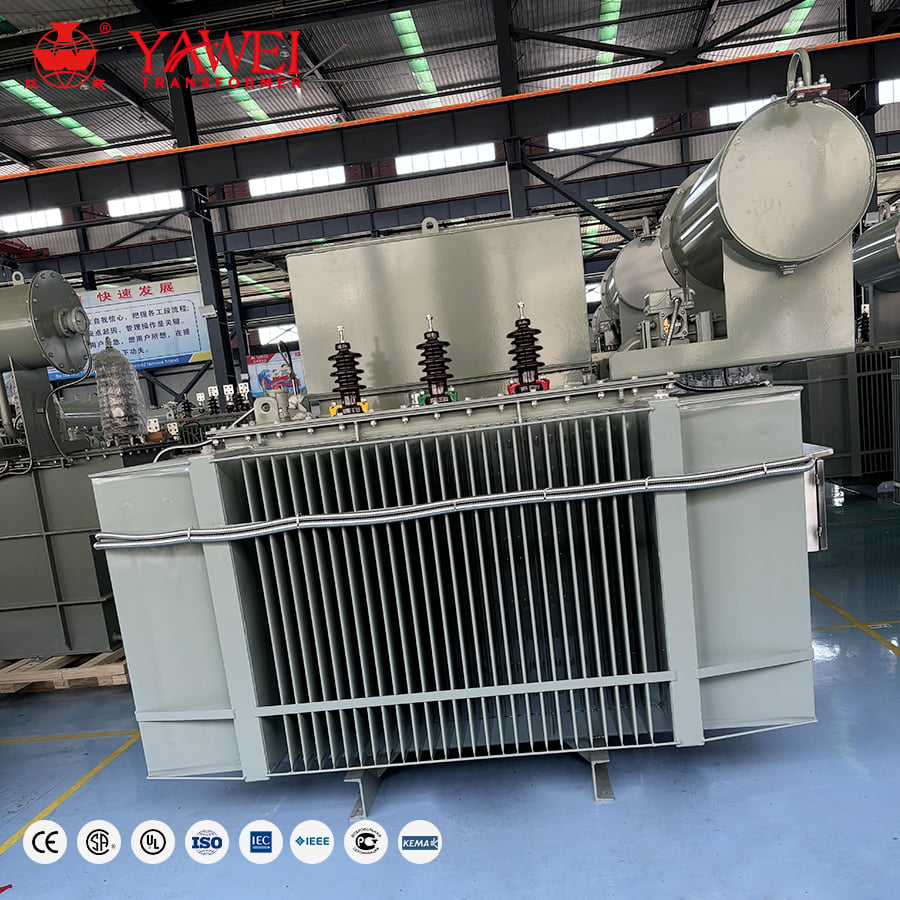
The first thing a 35 kV transformer supplier should provide is a complete electrical data table, not a headline. For a 35 kV oil-immersed transformer, the practical comparison set is: rated capacity (published from 3.15 MVA to 31.5 MVA), high-voltage window (35 kV to 38.5 kV), tapping range (plus or minus 2 × 2.5 percent), low-voltage window (3.15 kV to 10.5 kV), vector group (Yd11 or YNd11), no-load current (0.20 to 0.36 percent), short-circuit impedance (7.0, 8.0 or 10.0 percent), no-load loss (1.7 kW to 11.1 kW) and load loss (20.7 kW to 100.8 kW).
Two traps appear here. The first is quoting a capacity without saying which vector group and voltage ratio it refers to, since the same kVA rating can be arranged for different networks. The second is comparing loss figures that were measured under different reference conditions. A disciplined comparison puts every 35 kV transformer supplier on the same capacity, the same voltage ratio and the same reference temperature, and only then reads across the row. Asking every supplier for the same table format is the simplest way to make the comparison fair.
Impedance and short-circuit withstand
Short-circuit impedance is the parameter that links voltage regulation to fault current, and it is where suppliers first diverge. Yawei's 35 kV oil-immersed data table lists short-circuit impedance at 7.0, 8.0 or 10.0 percent, and any comparison should capture the value together with its tolerance band, because a nominal figure without a tolerance can hide a wide production spread.
Impedance is only half the story. A buyer evaluating a 35 kV transformer supplier should also request the short-circuit withstand capability — the ability of the transformer to survive a short-circuit event — and the type-test evidence behind it. Yawei's services page references IEC 60076-5 short-circuit withstand capability requirements, and buyers are advised to request the short-circuit current and duration for the withstand test, together with the corresponding type-test reports, for the specific capacity and voltage being purchased. The engineering logic is straightforward: impedance affects voltage regulation and the magnitude of fault current, while withstand capability affects safety when the network actually faults. Requiring both, for the same rating, is what makes two quotations comparable. These short-circuit withstand figures are among the values that should be confirmed against the supplier's test documentation before they are relied on in a contract.
Cooling class and temperature rise
Cooling is the second place where a 35 kV transformer supplier comparison is won or lost. Yawei's 35 kV oil-immersed product page lists cooling method as ONAF or ONAN, while the general oil-immersed product page lists ONAN with a maximum temperature rise of 45 degrees Celsius for top oil and 50 degrees Celsius for average winding, and a maximum ambient of 55 degrees Celsius. In practice, ONAN (natural oil circulation, natural air cooling) is the common configuration for a 35 kV oil-immersed transformer, and it can be extended to ONAF (forced air cooling) where additional capacity is needed at high ambient.
Temperature-rise classes are commonly set with reference to the IEC 60076-2 family, which defines top-oil and winding temperature-rise limits. The key point for comparison is that the differences between suppliers lie mainly in the cooling configuration, the temperature-rise margin designed into the unit, and the measured data recorded at the factory test. Nominal parameters alone will not reveal them. An enquiry that asks every 35 kV transformer supplier for the cooling method, the temperature-rise design values and the measured data, in the same format, will expose a supplier that is relying on a thin margin. As with the short-circuit figures, these temperature-rise values are best treated as values to confirm against the data sheet and the routine-test report for the specific unit.
Construction: winding, core and tank
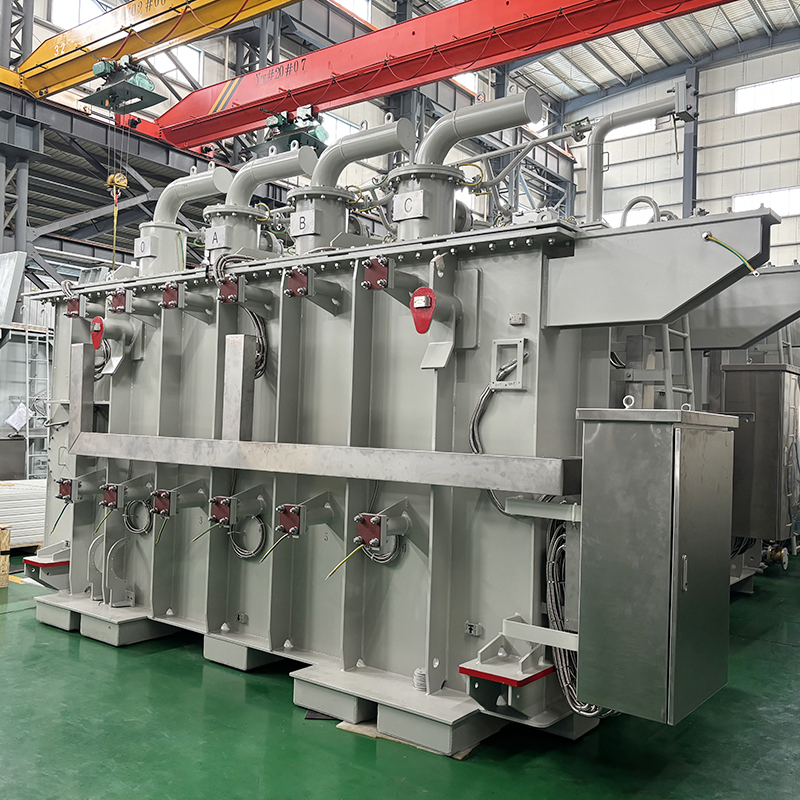
The third comparison area is materials and construction, because these details decide long-term reliability more than any single rating. On Yawei's published data, the 35 kV oil-immersed range uses vector groups Yd11 or YNd11 and a short-circuit impedance of 7.0, 8.0 or 10.0 percent. The oil-immersed tank is produced with mixed-gas automatic protective welding, corrugated-plate cooling, and automated washing, painting and shot-blasting; pad-mounted tanks use C3 to C5 anti-corrosion coatings; and windings may be copper or aluminium, including cast-resin and enameled-wire constructions.
Beyond the published descriptions, the construction details that most affect reliability are consistent across manufacturers: winding material and structure (copper windings resist short-circuit forces better than aluminium), core material and lamination process (which governs magnetic conduction and no-load loss), tank material and anti-corrosion coating (which governs corrosion resistance), insulation and sealing (which governs moisture ingress), and the tap-changing and cooling components. A buyer comparing a 35 kV transformer supplier should therefore ask for each vendor's winding, core and tank material and process descriptions, the relevant material certificates, and the associated test data — and read them on one baseline rather than by the strength of the marketing text. When two suppliers both claim "low loss" or "high short-circuit resistance", the material certificates and the type-test reports are what separate a claim from a fact.
Turning comparison into a checklist
A practical side-by-side evaluation of a 35 kV transformer supplier should capture, at minimum:
- Rated capacity and the voltage ratio the figure applies to.
- High-voltage and low-voltage windows, and vector group.
- Tapping range and tap-changer type.
- Short-circuit impedance with tolerance.
- Short-circuit withstand current and duration, with type-test reference.
- Cooling method and temperature-rise design values, with measured data.
- No-load and load loss at a stated reference temperature.
- Winding, core and tank materials and finishes, with material certificates.
- Insulation and sealing details.
Suppliers that can answer every line, for the exact rating on offer, are the ones to shortlist.
Running a fair comparison
A fair comparison begins long before the quotations arrive. The buyer should issue the same specification to every candidate, with the capacity, voltage ratio, vector group, tapping range, impedance and cooling stated explicitly, and require the same response format. When the answers return, the electrical table, the short-circuit data, the cooling and temperature-rise data and the construction details should be read column by column, not supplier by supplier; reading across suppliers keeps attention on the parameter rather than on the presentation.
It also pays to test each 35 kV transformer supplier with a question that cannot be answered from a glossy brochure. Ask for the measured no-load and load losses at a stated reference temperature, the impedance tolerance, or the material certificate for the winding conductor. A 35 kV transformer supplier that holds a genuine engineering file will answer quickly; one that is reselling will not. Where a candidate cannot provide a measured value, that gap is itself a data point, and a buyer comparing a 35 kV transformer supplier against a stronger competitor should treat missing evidence as a mark against the weaker answer rather than as a neutral result.
The shortlist should then be tested on documentation discipline. A reliable 35 kV transformer supplier can supply, for the exact unit on offer, the data sheet, the routine-test report and the material certificates without a special request. Because impedance, cooling and construction details are the parameters that actually decide how the transformer performs, the buyer should keep the commercial and technical tracks separate: price, lead time, warranty and payment terms matter, but a 35 kV transformer supplier should not be selected on price alone when the impedance, loss and cooling figures differ. The cheapest unit that later fails to coordinate with the protection, or that overheats at high ambient, is the most expensive choice in the long run.
A supplier-quality benchmark from a real project
Claims about short-circuit strength and construction quality are best tested against a delivered project. Yawei's official case pages include a 132 kV power transformer supplied for the substation of a steel factory in Seville, Spain, delivered to a Spanish transmission company. Industrial users — especially large electric-arc-furnace steel mills — place extreme demands on supply transformers, including short-circuit resistance capacity and power quality. For that project Yawei used advanced magnetic-field and short-circuit-force simulation software during design and adopted a special winding structure and pressing process so the transformer could withstand frequent impact loads and minimise harmonic influence. The official case page does not disclose the project date. That unit is rated above the 35 kV class, so it is not a like-for-like 35 kV order; it is, however, a useful benchmark of the design and construction discipline that a technically credible 35 kV transformer supplier should be able to demonstrate.
FAQ
What should a buyer compare first when evaluating a 35 kV transformer supplier?
Start with rated capacity, the high-voltage and low-voltage windows and the vector group, then move to impedance, losses, cooling and temperature rise.
Can a supplier quote success on impedance and short-circuit withstand together?
Yes, but ask for both the nominal impedance with its tolerance and the short-circuit withstand current and duration with the supporting type-test report for the same rating.
Why does cooling matter in a supplier comparison?
Because two units with the same nominal ratings can differ in cooling configuration and temperature-rise margin, and that margin is what determines how the transformer behaves at high ambient or under overload.
How many candidate suppliers should a project compare?
At least three, evaluated on identical specifications. Comparing a 35 kV transformer supplier on a different rating or reference temperature than its competitors tells you nothing, so insist on a common format before reading the results.
For the final engineering review, treat 35 kV transformer supplier as a project-specific decision term rather than a substitute for the approved datasheet.
Quality Assurance & Standards Notes
When comparing a 35 kV transformer supplier, the assurance evidence should be assessed with the same discipline as the ratings. Yawei operates ISO 9001, ISO 14001, ISO 45001 and SA8000 management systems, and its 10 kV and 35 kV distribution transformers and box-type substations are described as holding IEC, UL, TUV, CE, KEMA and GOST certification. Samples undergo routine, type and special tests at the National Transformer Quality Supervision and Inspection Centre, the Wuhan branch of the China Electric Power Research Institute, and the Suzhou Electrical Apparatus Research Institute. Yawei's services documentation also references IEC 60076 short-circuit withstand capability requirements, and temperature rise is commonly assessed against the IEC 60076-2 family. Because certification scope, certificate number, issuing body and validity must match the exact product and market, and because factory acceptance test criteria, warranty terms and delivery commitments are commercial matters, buyers should obtain the certificate, the type-test report and the agreed test plan for the specific 35 kV transformer being purchased and confirm they are current before award. Ratings, tolerances and loss figures quoted above are published catalogue values for the listed ranges and should be checked against the issued data sheet for the selected unit. See the 35 kV oil-immersed transformer product page for the published range, and the services overview for standard and testing support.