
 EN

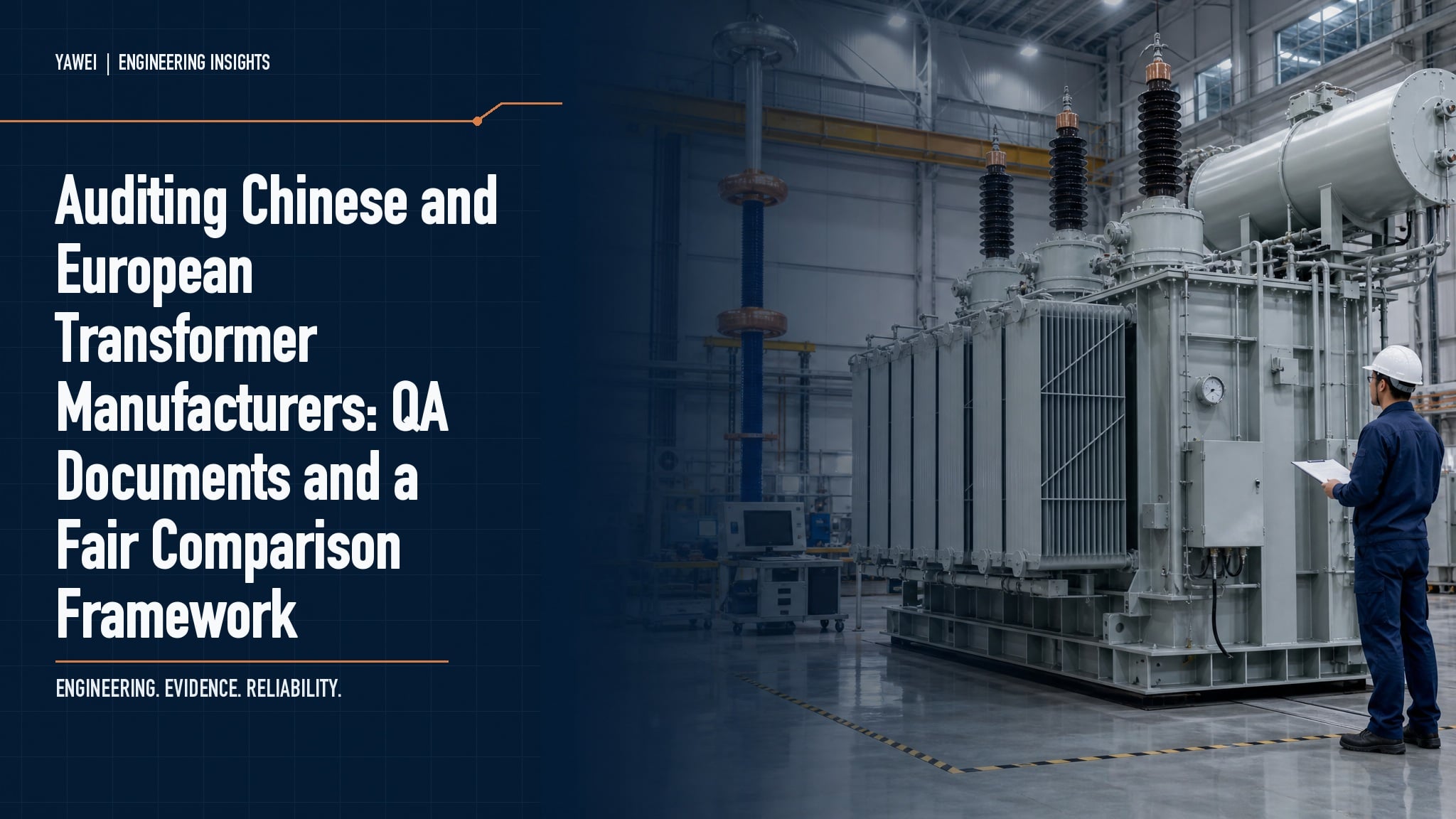
Sourcing transformers across regions fails for a predictable reason: buyers compare quotations that were never built on the same basis. A Chinese supplier may quote ex-works with a shortened certification pack, a European supplier may quote delivered with CE and ErP documentation included, and the two numbers then get compared as if they were equivalent. A disciplined transformer manufacturer audit fixes that problem by separating the questions that can be standardised — quality documents and acceptance evidence — from the questions that are genuinely region-specific, such as certification systems and compliance processes. This article sets out what a transformer manufacturer audit should request, and how to build a fair comparison framework around the answers.
What a transformer manufacturer audit should request
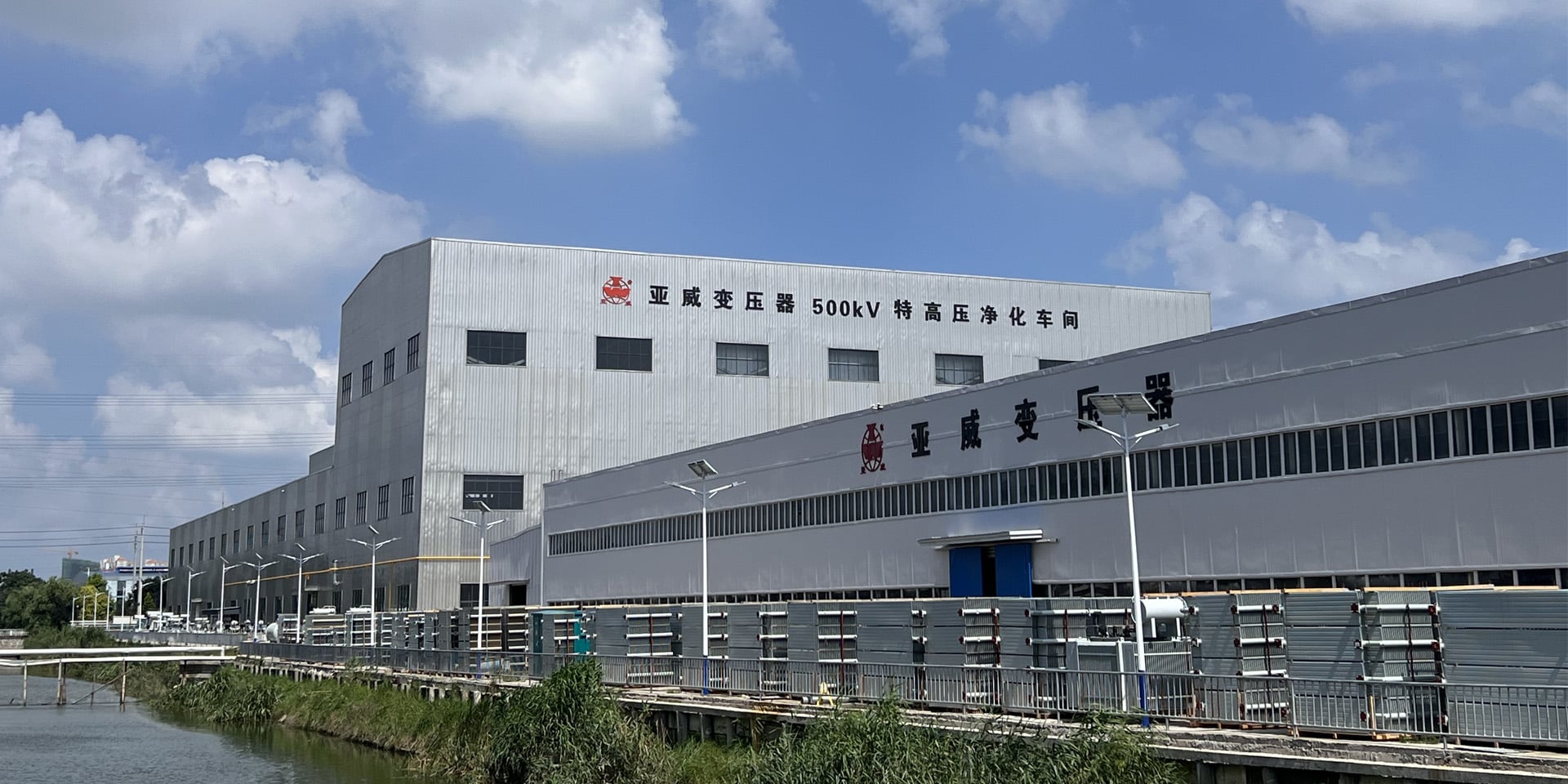
The document request can be unified across regions, even though the certification emphasis differs. For a Chinese manufacturer such as YAWEI, the published quality-assurance assets are ISO 9001, ISO 14001, ISO 45001 and SA8000 system certification plus a Jiangsu enterprise metrology qualification, with products tested through the National Transformer Quality Supervision and Inspection Center, the China Electric Power Research Institute (Wuhan) and the Suzhou Electrical Apparatus Research Institute. A transformer manufacturer audit of a Chinese supplier should therefore request metrology and calibration certificates, third-party type-test reports, routine-test records, a factory capacity and equipment list, and evidence of export performance. For a European manufacturer, the same audit should additionally request CE/EU-standard conformity, ErP energy-efficiency certification, factory-audit records including the quality-document system, and local certifications such as VDE. The audit content — documents and site — can be identical across regions; what changes is the certification system and where its emphasis lies. A properly scoped transformer manufacturer audit requests the qualifications that match the region and verifies their validity, rather than treating one region's certificate as a substitute for another's.
Timing, lead time and the transformer manufacturer audit
Lead time belongs in the audit because it exposes whether a quotation is realistic. Manufacturing lead times are generally related to voltage level and the degree of customisation: distribution-level transformers from Chinese manufacturers usually have shorter lead times measured in several weeks, while European and North American manufacturers tend to take longer — typically several weeks to months — because of scheduling and compliance processes; high-voltage and extra-high-voltage transformers generally take longer still. The specific differences vary with manufacturer capacity, order book and transportation. A transformer manufacturer audit should therefore ask the supplier to state manufacturing cycle and delivery cycle separately, and should account for sea or other transport time on top. A supplier that quotes a single lead-time number without separating build from delivery is giving the buyer a figure that cannot be checked against the project schedule. Where the schedule is fixed, the buyer should also establish whether the manufacturer holds raw material in stock or orders it per project, because material lead time frequently sits on the critical path independently of the manufacturing slot.
Certification checks in a transformer manufacturer audit
Certifications affect market access as well as credibility, so they are a core part of the audit. YAWEI holds ISO 9001, ISO 14001, ISO 45001 and SA8000 plus a metrology qualification, and states that its 10 kV/35 kV distribution transformers and substations hold IEC, UL, TUV, CE, KEMA and GOST certifications; the company states its products comply with IEC, IEEE, ANSI, CSA and EN. Its services documentation notes that United States projects require UL (UL 1561/1562) and IEEE C57, and that Canadian projects require CSA or ULC, which shows how certification governs market access. European manufacturers typically hold CE/ErP, VDE and EU-standard conformity, while North American manufacturers hold UL, IEEE C57 and CSA certifications. Whether a given certificate affects project acceptance depends on the project's technical specification and the host country's access requirements. A transformer manufacturer audit should therefore specify the required certifications in the tender by market and verify the validity of each certificate — scope, standard version, covered capacity and expiry — rather than accepting a general compliance statement.
Landed cost inside a transformer manufacturer audit
Cost comparisons belong in the audit only when they are built on the same basis. In life-cycle cost terms, the landed cost of importing transformers from China, including sea freight, insurance, tariffs and logistics, is usually lower than local supply from Europe or North America, but tariffs (each country's import rates), transport risk, customs clearance, inland transport and possible tariff adjustments must all be considered. A comprehensive comparison should convert purchase, transport, tariff, installation, operation and maintenance, and end-of-life disposal costs on one common basis; imported units are usually lower initially, but logistics and compliance costs must still be budgeted. Because specific tariffs and logistics costs are calculated from the target country's rates and freight prices, the transformer manufacturer audit should record the assumed duty rate, the Incoterm, the port of entry and the inland transport plan, so the landed figure can be reconstructed later rather than taken on trust.
Screening quality risks during a transformer manufacturer audit
Lower prices always raise the question of where the saving came from, and the audit exists to answer it. When sourcing from lower-cost regions, buyers should specifically screen for substandard materials — for example non-standard copper or aluminium windings, or core magnetic material that does not conform — counterfeit or uncertified components such as bushings, tap changers and instruments, cutting of corners in insulation, welding or coating, and falsified type or routine test reports. The preventive measures are concrete and testable: require material certificates and component provenance, insist on third-party witnessed testing, carry out on-site factory audits, and demand traceable quality documents. Where a doubt remains, sampling and third-party inspection close the loop. A transformer manufacturer audit that focuses only on paper certificates and never inspects the incoming-material controls, the winding operation or the test bench is not, in practice, an audit.
Interviewing the supplier during a transformer manufacturer audit
Documents tell a buyer what a factory claims; a site visit confirms what it does. During a transformer manufacturer audit, the interview and walk-through should follow the production route in order: incoming-material inspection and material certificates, core cutting and stacking, winding and insulation, vacuum or casting processes where relevant, tank fabrication and coating, final assembly, and the test bay. At each station the auditor should ask for the controlling document, the acceptance criterion and the record that proves the criterion was met. Two questions expose most weaknesses: whether the material certificates are traceable to a specific order, and whether the routine test that the buyer is witnessing uses calibrated instruments with in-date certificates. An audit that records the answers to these questions produces a defensible quality opinion, rather than an impression formed from the showroom.
The fair comparison framework for a transformer manufacturer audit
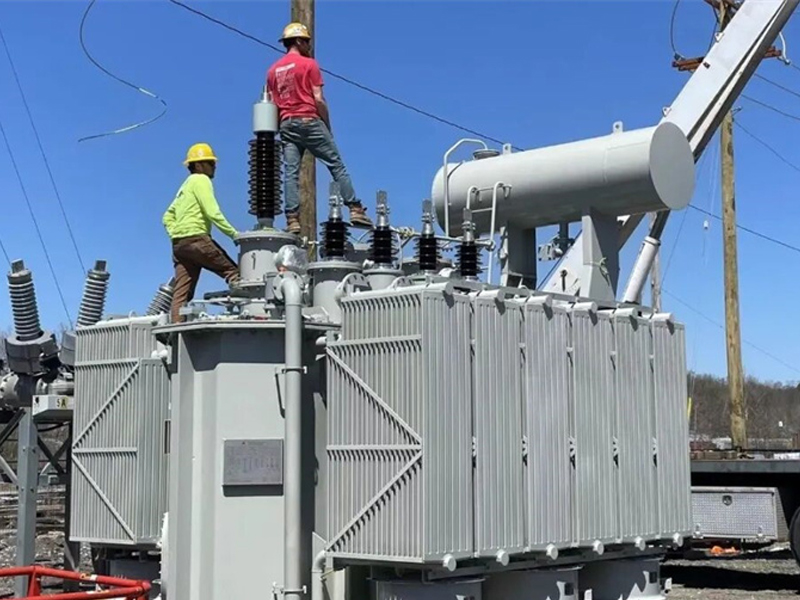
The purpose of the audit is to make offers comparable, and that requires a fixed structure. To build a fair cross-region comparison, the transformer manufacturer audit should unify four dimensions. First, the technical baseline: the same voltage level, capacity, losses assessed on a capitalized basis, short-circuit withstand, and standard system. Second, the acceptance criteria: the required type and routine tests, and the witnessing method. Third, the commercial criteria: landed or duty-paid price, lead time, warranty and after-sales. Fourth, risk and hidden costs: logistics, compliance, spare parts and long-term support. Together these produce a technical-and-commercial scoring matrix in which each supplier is judged on identical inputs. The single most common cause of a distorted comparison is an inconsistent quotation base — one bidder quoting ex-works without test reports, another quoting delivered with a full certification pack — and the fair comparison framework exists precisely to eliminate that distortion before scores are awarded.
After-sales evidence and the transformer manufacturer audit
After-sales capability is evidence as much as service, and it should be audited rather than assumed. YAWEI's services documentation describes its after-sales model for Western markets: in Germany a 7x24 hotline with a service-level agreement (SLA) covering a 2-hour phone response and 24/48/72-hour tiered site arrival, plus spare-parts warehouses delivering emergency parts within 24–72 hours; in Canada hub spare-parts warehouses, an authorised service-partner alliance, bilingual engineers and risk-based maintenance with condition monitoring such as DGA, infrared and partial-discharge testing; and in the United States UL-compliant component replacement. Chinese manufacturers such as YAWEI have built regional after-sales systems for Western markets, while Western local manufacturers usually offer more convenient local response and spare parts at higher prices. A transformer manufacturer audit should therefore require the responder to state after-sales response times, spare-parts supply arrangements and remote-support terms, and should carry those terms into the contract, so that the service differences between regions are balanced deliberately rather than discovered after delivery.
Application example
An official project reference that demonstrates full-scope international delivery is YAWEI's 115 kV substation project for the Puerto Rico electric power authority in the United States. The published reference covers design, engineering, manufacturing, testing, delivery, installation and commissioning — the full chain a buyer would want to see evidenced in a factory audit. YAWEI's case record also lists other overseas projects, including a 345 kV fully insulated power transformer project for a Georgia transmission company, a 110 kV substation project for a Mongolian transmission company, a 15 MVA pad-mounted transformer project for a US transmission company, and general contracting installation projects in Tajikistan and Uzbekistan. The official sources do not disclose project dates for these references, so no dates are asserted here. For an audit, the value of such references is that they show both the scope of delivery and the export markets covered, which a buyer can then verify against certificates and test reports.
Quality Assurance & Standards Notes
- System and product qualifications: YAWEI states ISO 9001, ISO 14001, ISO 45001 and SA8000 system certification plus a Jiangsu enterprise metrology qualification, and states that its 10 kV/35 kV distribution transformers and substations hold IEC, UL, TUV, CE, KEMA and GOST certification; the company states its products comply with IEC, IEEE, ANSI, CSA and EN.
- Test basis: routine, type and special tests are stated to be performed at the National Transformer Quality Supervision and Inspection Center, CEPRI (Wuhan) and the Suzhou Electrical Apparatus Research Institute.
- Market scope of certifications: UL 1561/1562 and IEEE C57 are cited for United States projects, CSA/ULC for Canadian projects, and CE/ErP, VDE and EU-standard conformity for the European market. These certifications are market-specific and are not interchangeable; each must be verified for scope and validity against the target country's access requirements.
- Verification: require metrology/calibration certificates, third-party type-test reports, routine-test records, a factory capacity and equipment list, and export-performance evidence; a third-party witnessed audit is the strongest form of verification. Specific duty rates, freight costs and lead times are project-specific and should be confirmed with forwarders and customs brokers before any figure is written into the comparison matrix.
Internal references: Review the company profile and the services pages before finalising a transformer manufacturer audit checklist and comparison matrix.
Table of Contents
- What a transformer manufacturer audit should request
- Timing, lead time and the transformer manufacturer audit
- Certification checks in a transformer manufacturer audit
- Landed cost inside a transformer manufacturer audit
- Screening quality risks during a transformer manufacturer audit
- Interviewing the supplier during a transformer manufacturer audit
- The fair comparison framework for a transformer manufacturer audit
- After-sales evidence and the transformer manufacturer audit
- Application example
- Quality Assurance & Standards Notes