
 EN
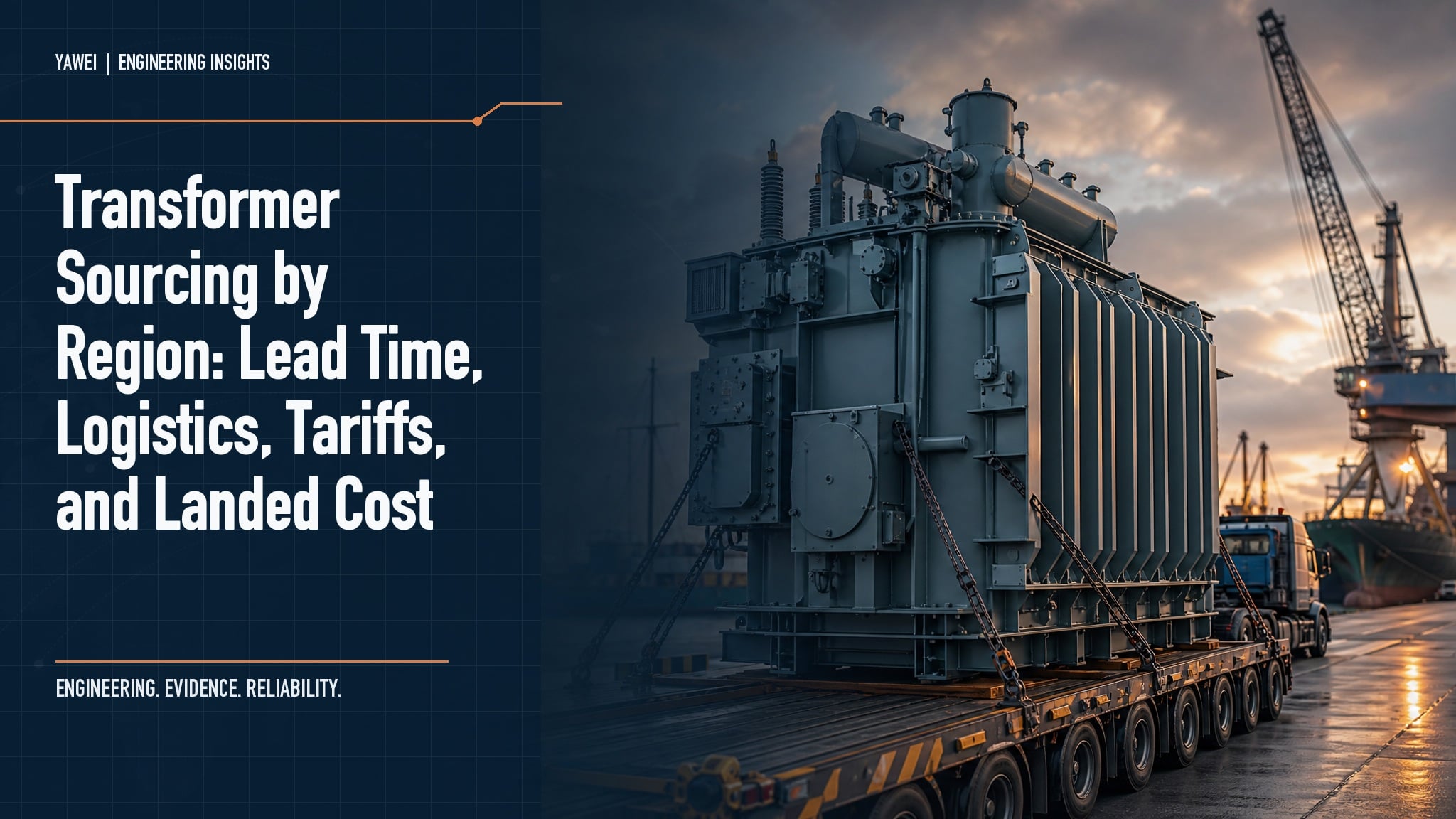
Regional transformer sourcing is usually reduced to a single question: which supplier quotes the lowest price? In practice, the more useful question is which option delivers the lowest total cost of ownership once lead time, freight, duty, inland transport, and compliance are fully counted. Buyers who compress transformer sourcing into a unit price often discover, only after the equipment reaches site, that the true cost was set by shipping, tariffs, and schedule risk rather than by the factory quotation. This guide takes a deliberately calculation-first approach to transformer sourcing across China, Europe, and North America. It does not publish fixed regional lead times or fixed tariff rates, because both move with capacity, voltage class, order book, shipping lane, and each destination country's trade policy. Instead, it shows how to build a defensible comparison yourself, using inputs you can verify project by project.
Why a Framework Beats a Fixed Number
Any figure quoted for "typical regional lead time" or "average import duty" is a snapshot, not a specification. Manufacturing schedules shift with factory loading; freight rates shift with lane demand and fuel; duty treatment shifts with classification, origin, and trade agreements. That is why a credible transformer sourcing decision is built on a repeatable framework rather than a borrowed benchmark. The framework has four blocks — lead time, logistics, tariffs and customs, and lifecycle cost — and each block should be populated with project-specific inputs before two offers are compared side by side. A framework also protects the buyer: it forces every supplier, regardless of region, to answer the same questions in the same units, which is the only way to avoid a comparison that flatters one region because its quotation excluded items another region included.
Lead Time: Build a Schedule, Not a Slogan
Manufacturing lead times generally track voltage level and the degree of customization. Distribution-level units are usually the fastest to schedule, while high-voltage and extra-high-voltage power transformers generally take longer because of design review, winding and insulation work, tanking, and full test programs. Beyond that broad pattern, regional differences are real but conditional. Chinese manufacturers are often credited with shorter base lead times on distribution-class equipment, while European and North American manufacturers may carry longer schedules because of order backlog and compliance processes. None of these generalizations is a substitute for a written schedule.
For transformer sourcing, the practical move is to split the clock into distinct, contractually defined stages: engineering and drawing approval, material and component procurement, winding and assembly, tanking and drying, routine and type testing, factory acceptance testing, packing, and shipment. Ask each supplier to state the duration of each stage, the assumed start point (purchase order, deposit, or approved drawings), and the milestones where your inspection team can intervene. Then convert every stage into calendar dates from a common zero. Two suppliers can quote the same total "delivery" while meaning entirely different things, so the schedule — not the headline number — is what makes transformer sourcing comparable.
Logistics: The Variables That Move the Date and the Price
Logistics is where regional sourcing most often drifts from plan. The core variables to model are mode (sea, rail, road, or a combination), route and transit time, number of handling points, dimensional and weight constraints, and the securing and protection standard for heavy, oil-filled or fragile equipment. Large power transformers often exceed standard container dimensions, which pushes them into break-bulk or flat-rack shipping and changes both cost and transit time. Inland transport from the port of discharge to site then adds its own constraints: road permits, bridge and axle-load limits, escort requirements, and site-access geometry.
For transformer sourcing, four questions should be answered before any logistics number is trusted. First, what is the exact packed weight and the largest single dimension of the unit as shipped? Second, does the route require special handling, cranes, or multi-axle trailers at either end? Third, what is the realistic transit time door-to-door, including customs dwell at both ends? Fourth, what protection is specified against moisture, vibration, and impact, and who bears the risk at each handover point. The answers determine whether a low ex-works price survives contact with the transport plan. A supplier's stated delivery date is only meaningful once it is reconciled with this door-to-door model.
Tariffs and Customs: Treat Them as Project Inputs
Tariffs should be treated as inputs, not assumptions. Import duty depends on the classification of the specific equipment, the declared origin, the applicable trade regime, and any preferential agreements in force on the date of import. Because these factors vary by country and change over time, no article — and no supplier's generic brochure — can responsibly publish a fixed rate. What a buyer can do is structure the comparison so that duty is explicit rather than hidden.
For each candidate region, model the following: the customs classification that will apply to the equipment as delivered; the duty rate in force for that classification and origin; any anti-dumping, safeguard, or additional measures that may apply; value-added tax or equivalent recoverable or non-recoverable taxes; the customs value basis (which may include freight and insurance depending on Incoterms); and clearance and brokerage costs. Incoterms matter enormously here. FOB, CIF, DAP, and DDP place duty and freight obligations on different parties, so two offers at the same nominal figure can differ by the full amount of duty and inland freight. In transformer sourcing, the discipline is to convert every offer to one common basis — ideally a delivered, duty-paid price at site — before ranking suppliers. Only then does the tariff question resolve into a single, comparable number.
Landed Cost and Lifecycle Cost: One Model, Six Lines
Landed cost is the purchase price plus every cost required to move the equipment to site in an installable condition. Lifecycle cost then adds the costs of owning it. For transformer sourcing, a single model with six lines keeps the comparison honest:
- Equipment price — the factory price for the specified ratings, materials, losses, and accessories, converted to one currency.
- Transport and insurance — packed weight and dimensions multiplied by the applicable freight and insurance rates for the chosen lane and mode.
- Duties, taxes, and clearance — the duty and tax treatment established in the customs step above, plus broker and clearance fees.
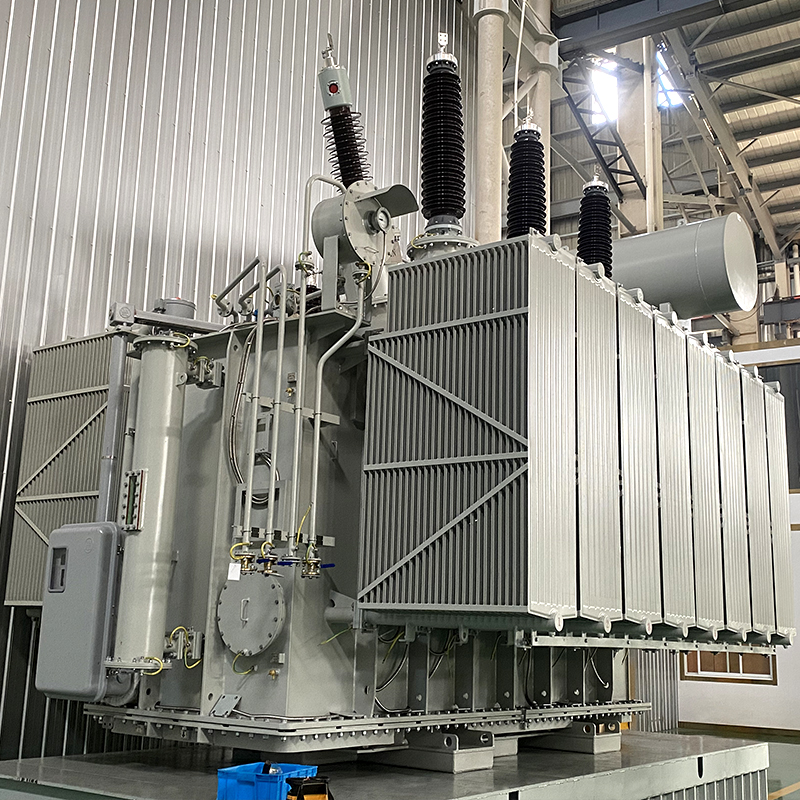
- Installation and commissioning — foundation and civil works where applicable, unloading, assembly, oil filling where relevant, connection, and commissioning.
- Operation and maintenance — capitalized no-load and load losses over the assumed service life (losses valued at the project's electricity price and load profile), plus inspection, cleaning, oil testing where applicable, and spares.
- End-of-life — disposal, recycling, or refurbishment cost, which varies with technology and local regulation.
Each line must use the same assumptions across all suppliers. Losses, in particular, must be capitalized with a customer-agreed formula, because a lower purchase price is meaningless if it hides higher guaranteed losses. When the six lines are summed and discounted over the same life and discount rate, the apparent gap between a low-cost origin and a local supplier frequently narrows — and sometimes reverses — which is exactly why the model, not the quotation, should drive the transformer sourcing decision.
A Real Cross-Border Project Reference
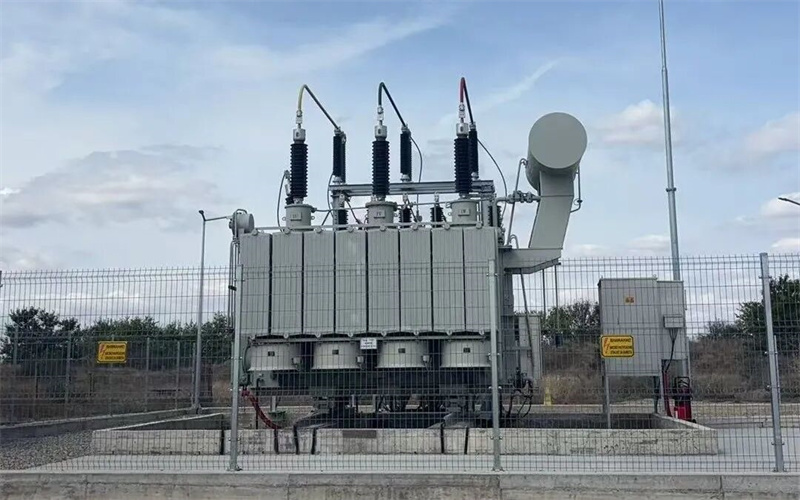
One publicly documented example of cross-border transformer sourcing is Yawei's 40,000 kVA power energy storage project for a Bulgarian transmission company. The published scope covers design, manufacturing, supply, on-site delivery, engineering, installation, testing, and commissioning — a full turnkey chain that touches every stage of the framework above, from engineering approval through international freight to site commissioning. The value of citing this project is not a headline number but the structure of the scope: it demonstrates that a single supplier can be held accountable for lead-time stages, logistics, and site delivery rather than only for the ex-works equipment. Buyers who adopt this "scope-all" contracting model make transformer sourcing measurable, because every milestone is a defined deliverable rather than an implied promise.
Risks and Hidden Costs
The cheapest offer is rarely the lowest-cost outcome. For transformer sourcing, watch for four recurring risks. First, substandard or non-certified materials and components — non-standard windings, counterfeit bushings or tap changers, or falsified test reports. Second, underestimated logistics, where freight, permits, or site access turn a low price into an expensive delivery. Third, ambiguous acceptance criteria, where missing test definitions or standard editions create disputes at handover. Fourth, long-term support gaps, where spare-parts lead times or remote-support terms are absent from the contract. The mitigation is the same in each case: require material certificates and component provenance, define the logistics plan and risk transfer points, fix the acceptance standards and witnesses, and write after-sales response and spares terms into the agreement.
A Practical Inquiry Checklist
A disciplined transformer sourcing process treats each item below as a pass or fail gate rather than a courtesy request, because an unanswered item becomes an unbounded risk later. To keep transformer sourcing on a common basis, the inquiry should request: the full ratings and ratings-derating data for the specified voltage and capacity; guaranteed losses with measurement method; the standards and standard editions the design will follow; the required certifications and their certificate evidence; a stage-by-stage manufacturing schedule with named milestones; packed weight and dimensions; the proposed Incoterms and delivery basis; the test plan and witnessing option; the warranty period and after-sales terms; and the documentation package to be supplied. When every supplier answers these items in the same format, the commercial comparison writes itself, and the region question becomes a matter of verified inputs rather than sales narrative.
You can review the specific product families that support cross-border transformer sourcing on our official power transformers page, and compare construction and ratings for oil-immersed transformers as part of your technical baseline.
For the final engineering review, treat the sourcing decision as project-specific rather than as a substitute for the approved datasheet.
Quality Assurance & Standards Notes
A fair transformer sourcing comparison rests on evidence, not claims. Buyers should therefore request, and verify, the documents that sit behind every supplier's quality statement. Jiangsu Yawei Transformer holds ISO 9001, ISO 14001, and ISO 45001 system certifications together with SA8000, plus a Jiangsu enterprise metrology certification, and states that its 10 kV and 35 kV distribution transformers and substations hold IEC, UL, TUV, CE, KEMA, and GOST certifications, with products tested at the National Transformer Quality Supervision & Inspection Center, CEPRI Wuhan, and the Suzhou Electrical Apparatus Research Institute. For transformer sourcing, these three layers must be kept distinct: a management-system certificate proves process governance, a product certificate proves a specific type has been assessed, and a third-party test report proves a measured result on a defined sample. Requests should therefore name the standards and editions, the exact certificates, the certificate subject and validity, and the tests to be witnessed or repeated. Acceptance criteria, guaranteed losses, and after-sales terms should be fixed in the contract before any regional offer is treated as final.
Table of Contents
- Why a Framework Beats a Fixed Number
- Lead Time: Build a Schedule, Not a Slogan
- Logistics: The Variables That Move the Date and the Price
- Tariffs and Customs: Treat Them as Project Inputs
- Landed Cost and Lifecycle Cost: One Model, Six Lines
- A Real Cross-Border Project Reference
- Risks and Hidden Costs
- A Practical Inquiry Checklist
- Quality Assurance & Standards Notes