
 EN

Few topics cause more late-stage disputes in international power projects than transformer certification requirements. A supplier states that its products "meet international standards," the buyer reads that as "certified for my market," and the gap between the two only becomes visible when the owner's engineer refuses to accept the equipment at site. The confusion is understandable, because the word "certification" is used loosely to describe at least four different things: a claim of standard compliance, a product-type certificate, a management-system certificate, and a third-party test report. Transformer certification requirements only make sense when each of these layers is named precisely and mapped to the actual acceptance criteria of a specific project in a specific country. This article separates the layers, explains how regional requirements reach the point of project acceptance, and shows how to verify evidence rather than accept a slogan.
Four Different Things Called "Certification"
The first discipline in any discussion of transformer certification requirements is to stop using one word for four concepts.
Standard compliance is a statement that a design follows a named standard — for example, IEC 60076, IEEE C57, ANSI, CSA, or EN. It is a design and testing intent, and it is meaningful only when the standard, its edition, and the applicable performance levels are named.
Product certification is an assessment, by a certification body, that a defined product type meets a defined standard, resulting in a certificate for that type. Common examples in the transformer industry include UL, TUV, CE, KEMA, and GOST, together with IEC-based type approvals.
System certification is an assessment of the manufacturer's management system — for example, ISO 9001 for quality, ISO 14001 for environment, and ISO 45001 for occupational health and safety — rather than of a specific unit of equipment.
Third-party testing is an independently witnessed or independently performed test that produces a report on a particular sample: routine tests, type tests, and special tests carried out at a recognized laboratory.
These four layers are complementary, but they are not interchangeable. A management-system certificate does not certify a product; a product certificate does not guarantee every unit in a batch; and a standard-compliance claim is not a certificate at all. Most disputes over transformer certification requirements trace back to a supplier presenting one layer as if it were another.
System Certification Versus Product Certification
System certification answers the question "is this factory run to a recognized quality, environmental, and safety standard?" In the transformer sector, the commonly requested system certificates are ISO 9001, ISO 14001, and ISO 45001, sometimes accompanied by a social-accountability standard and a national metrology certification. Jiangsu Yawei Transformer holds ISO 9001, ISO 14001, and ISO 45001 system certifications together with SA8000, plus a Jiangsu enterprise metrology certification. These documents are valuable because they show process governance, traceability, and calibration discipline — precisely the systems that reduce the risk of substandard windings or unreliable components.
Product certification answers a different question: "has this specific product type been assessed against a specific standard?" Yawei states that its 10 kV and 35 kV distribution transformers and substations hold IEC, UL, TUV, CE, KEMA, and GOST certifications, and that its products are tested at the National Transformer Quality Supervision & Inspection Center, CEPRI Wuhan, and the Suzhou Electrical Apparatus Research Institute. When a buyer evaluates transformer certification requirements, product certificates carry the most direct weight for acceptance, because they attach to the equipment class rather than to the factory as a whole. The critical questions are always the same: on what product type was the certificate issued, to what standard and edition, by which body, and for how long is it valid.
Standard Compliance Is a Claim to Be Verified
Suppliers frequently state that they "manufacture to IEC, IEEE, ANSI, CSA, and EN." That statement describes capability and intent, not a completed assessment. For transformer certification requirements, a standard-compliance claim must be converted into a verifiable deliverable: which standard edition governs the design, which tests demonstrate compliance, and who witnesses them. A design that "follows" IEC 60076 is not the same as a unit whose routine and type tests are documented under IEC 60076 by an accredited laboratory. The practical test is whether the supplier can produce the standard, the edition, the test plan, and the test report as a linked chain for the exact configuration being purchased.
A further complication is that transformer certification requirements often arrive from more than one source. The host country's grid code or utility connection agreement may set one requirement, the project's technical specification may add another, and the owner's insurer or authority may impose a third. When these sources conflict — for example, when a national mark is named in one document and an international standard in another — the buyer should reconcile them before the tender rather than after award. The cleanest practice is to build a single certification matrix that lists each applicable standard and certificate against the product scope, then require every supplier to respond to the same matrix. This makes transformer certification requirements comparable across bidders and prevents a last-minute scramble when a missing credential threatens the energization date.
How Regional Requirements Reach Project Acceptance
Transformer certification requirements become project acceptance requirements when a host country or a project specification names the certifications that equipment must hold to be connected, insured, or approved. The regional pattern is broadly consistent, though the details always depend on the specific market and project.
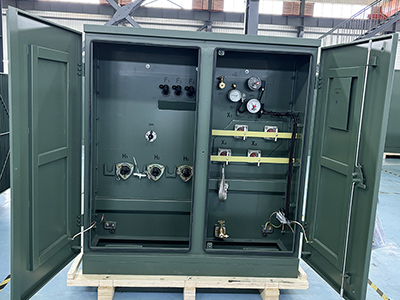
- North America: United States projects commonly reference UL standards for the relevant transformer category together with IEEE C57 for performance. Yawei's published service information notes that US projects require UL (UL 1561/1562) and IEEE C57, and that Canadian projects require CSA/ULC. This is why North American acceptance decisions usually hinge on a specific product certificate and on IEEE-referenced test evidence.
- Europe: European projects typically look for CE marking under the applicable directives, EU-standard conformity, and ErP-related energy-efficiency compliance, sometimes with national marks such as VDE.
- Other markets: Access requirements vary and may reference IEC, GOST, or national codes depending on the jurisdiction and the owner's technical specification.
The lesson for transformer certification requirements is that region, market, and project specification must be read together. A certificate that satisfies one market does not automatically satisfy another, and the acceptance gate is set by the project's specification and the host country's rules, not by the supplier's marketing.
Reading a Certificate the Right Way
Because transformer certification requirements are so often reduced to "we have the certificate," buyers should apply a fixed reading routine. For every certificate, record the certificate subject (exactly which legal entity), the product scope (which product types and ratings), the standard and edition, the issuing body, the issue and expiry dates, and any conditions or limitations. Then confirm that the equipment being purchased actually falls inside the scope. A common failure is a certificate that covers a related but different product family, or that has lapsed, or that names a parent entity rather than the supplying factory. Verifying these fields takes minutes and prevents a costly acceptance dispute later.
Because transformer certification requirements differ by market and by project, no single certificate set is universally sufficient. A buyer importing into several countries should expect to compile different evidence for each destination, and should not assume that a certificate valid for one market can simply be re-presented for another. Keeping a country-by-country record of transformer certification requirements — the standards named, the certificates required, and the tests that must be witnessed — turns a recurring compliance task into a reusable checklist and shortens the review of every future offer.
Project Acceptance: Specifications, Witnesses, and Documents
Acceptance is the moment transformer certification requirements are finally tested. In well-structured projects, acceptance is defined before the contract is signed and includes three elements. First, the technical specification states the standards, the required product certificates, and the performance levels, including losses and impedance. Second, the test plan defines which tests are routine and which are type or special, and who witnesses them — the buyer, the owner's engineer, or an independent inspector. Third, the documentation package assembles drawings, test reports, material certificates, and the certificate set. When all three are fixed in writing, acceptance becomes a matter of checking delivered evidence against agreed criteria. When they are not fixed, acceptance becomes a negotiation, and transformer certification requirements turn into a source of argument rather than a basis for decision.
A Real North American Project Reference
A publicly documented example of how regional requirements shape acceptance is Yawei's 15 MVA pad-mounted transformer project for a United States transmission company. The official project page notes the North American market requirements including UL and IEEE, which is exactly the point at which transformer certification requirements stop being abstract: a pad-mounted unit intended for a US utility has to hold the product certification and reference the performance standard that the utility's specification names, or it will not be accepted for installation. The project illustrates the layered logic described above — a system-certified factory, a product-certified equipment class, and IEEE-referenced test evidence, all aligned to one market's acceptance rules.
A Verification Checklist for Buyers
Before treating any offer as compliant, confirm the following. Does the buyer's specification name the required standards, editions, and certificates? Does the supplier's certificate set actually cover the product type and ratings on offer? Do the certificate subject and the supplying factory match? Are the certificates current and does the scope cover the destination market? Is the test plan aligned to the named standard, with witness arrangements agreed? Are the acceptance criteria — including losses and impedance — fixed contractually? Finally, is the documentation package defined so that handover cannot stall? Answering these questions turns transformer certification requirements from a vague credential into a controlled, auditable acceptance process.
You can review how certification and quality evidence is presented in our company profile, and see how market-specific support is structured on our services page, when assembling your acceptance criteria.
For the final engineering review, treat the certification matrix as project-specific rather than as a substitute for the approved datasheet.
Quality Assurance & Standards Notes
For transformer certification requirements, precision is protection. Jiangsu Yawei Transformer holds ISO 9001, ISO 14001, and ISO 45001 system certifications together with SA8000 and a Jiangsu enterprise metrology certification, and states that its 10 kV and 35 kV distribution transformers and substations hold IEC, UL, TUV, CE, KEMA, and GOST certifications, with products tested at the National Transformer Quality Supervision & Inspection Center, CEPRI Wuhan, and the Suzhou Electrical Apparatus Research Institute. These categories must never be conflated: system certification addresses the factory's management processes, product certification addresses a specific assessed product type, standard compliance is a design-and-test claim that must be evidenced, and third-party test reports document measured results on defined samples. Buyers should therefore specify the standards and editions in the tender, request the exact certificates with subject, scope, and validity, confirm that the destination market's access requirements are met, and verify that test witnessing and documentation are agreed before acceptance. Certificates should also be re-checked against the specific configuration ordered, because transformer certification requirements apply to the product actually supplied, not to a general brand claim.
Table of Contents
- Four Different Things Called "Certification"
- System Certification Versus Product Certification
- Standard Compliance Is a Claim to Be Verified
- How Regional Requirements Reach Project Acceptance
- Reading a Certificate the Right Way
- Project Acceptance: Specifications, Witnesses, and Documents
- A Real North American Project Reference
- A Verification Checklist for Buyers
- Quality Assurance & Standards Notes