
 EN
A power transformer RFQ is only as good as the technical baseline it defines. When the request for quotation is complete, suppliers price the same machine and the resulting offers can be compared line by line. When it is vague, each supplier fills the gaps with its own assumptions, and the buyer ends up comparing three different transformers at three different prices with no reliable basis for choosing. A well-built power transformer RFQ therefore specifies four things precisely: the electrical ratings, the impedance and loss guarantees, the tap-changing arrangement, and the cooling and site conditions the unit must survive. This article walks through each block, using published Yawei parameter families as concrete examples, and explains why each field changes the price, the lifecycle cost, or the acceptance risk of the project.
Ratings: Capacity, Voltage Ratio, and Vector Group
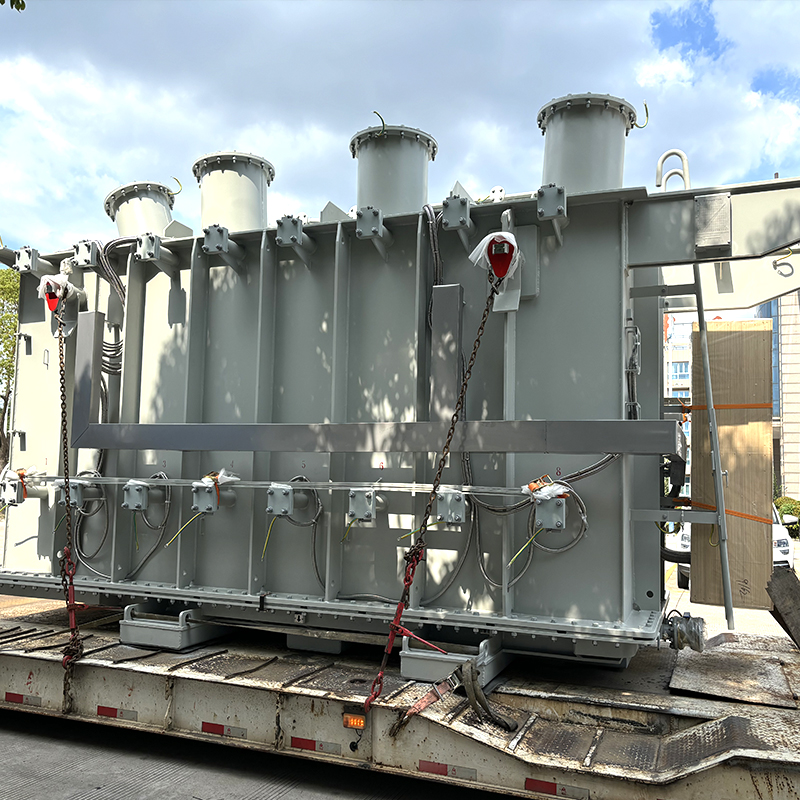
The first duty of a power transformer RFQ is to fix the electrical identity of the unit. Three fields are indispensable: rated capacity, the high-voltage and low-voltage voltage ratio, and the vector group. Capacity sets the physical size of the core and windings and therefore much of the cost; the voltage ratio determines insulation levels and the interface with the rest of the substation; and the vector group determines how the transformer connects with parallel units and how phase relationships behave in the network.
Published Yawei data illustrates the level of specificity required. For a 220 kV double-winding power transformer, the published table lists rated capacity from 31.5 MVA to 240 MVA, high-voltage levels of 220, 230, and 242 kV, low-voltage levels from 6.3 to 38.5 kV, and a vector group of YNd11. Those values are not interchangeable between projects: a 220 kV connection cannot be substituted with a 230 kV design without re-checking insulation coordination, and a different vector group changes how the unit may be paralleled. A competent power transformer RFQ therefore states each field explicitly and also records the frequency (50 Hz or 60 Hz) and the expected operating regime. Yawei also states that it manufactures non-standard specifications on request, which is why the RFQ should describe the required rating rather than force the project into a catalogue value; the buyer's specification, not the standard table, should drive the design.
Impedance and Losses: The Numbers That Decide Lifecycle Cost
The second block of a power transformer RFQ covers the performance figures that determine operating cost and system behavior. Impedance voltage governs short-circuit current levels and voltage regulation; no-load loss represents the continuous cost of energizing the core; and load loss represents the cost of carrying current, which rises with loading. If the RFQ leaves these values open, suppliers will optimize toward a lower purchase price — usually by accepting higher losses — and the buyer will pay for that choice every hour of the transformer's life.
Published Yawei data again shows the expected precision. For the same 220 kV double-winding family, the published table gives short-circuit impedance (HV-LV) of 12–14%, no-load loss from 15 kW to 70 kW, and load loss from 115 kW to 484 kW across the capacity range. For 35 kV oil-immersed units, the published table gives no-load current of 0.32–1.10% and short-circuit impedance of 6.5–8%. A strong power transformer RFQ states the required impedance with its tolerance, the guaranteed no-load loss, and the guaranteed load loss, and it states the reference temperature and measurement standard so that guarantees are enforceable. Well-run tenders then capitalize losses — multiplying the guaranteed losses by the project's electricity price and expected load profile over the service life — so that a slightly more expensive but lower-loss unit can be identified as the true lower-cost choice.
Tap Changers: Type, Range, and Steps
Voltage varies across the network, so the power transformer RFQ must define how the unit compensates for it. Three fields matter: the tap-changer type, the tap range, and the regulating steps. The choice between an off-circuit (de-energized) tap changer and an on-load tap changer is a significant technical and commercial decision. Off-circuit changers are simpler and are used where the operating voltage is stable and infrequent adjustment is acceptable; on-load tap changers allow regulation under load and are used where voltage must be controlled while the transformer remains in service, at higher cost and complexity.
Published Yawei data shows the practical range of options. For 220 kV units, the published table lists off-circuit taps of ±4×1.25%, ±6×1.25%, and ±8×1.25%, and on-load taps of ±2×2.5%. For 110 kV units, it lists ±8×1.25%; for 35 kV units, ±5% and ±2×2.5%; and for oil-immersed units, an off-circuit tap changer with five positions at ±2×2.5%. A complete power transformer RFQ names the required tap-changer type, the tap range, and the number and size of steps, and specifies the tap position that defines the rated voltage. Recording these fields removes the ambiguity that otherwise appears at the approval-drawing stage, when a supplier's default tap scheme is discovered to differ from expectations.
Cooling, Temperature Rise, and Site Conditions
The fourth block of a power transformer RFQ connects the machine to its environment. The cooling method determines how heat leaves the unit — ONAN, ONAF, or other arrangements — and must match the expected load profile and ambient conditions. Temperature-rise limits set the permissible rise of the top oil and average winding above ambient, and the ambient conditions define the temperature, altitude, humidity, and seismic or pollution requirements the unit must tolerate. Specifying these fields protects both performance and life: an under-cooled unit in a hot climate will run hotter than intended, and an over-specified cooling scheme adds unnecessary cost.
Published Yawei oil-immersed data provides a concrete reference point: the published parameters cite IEC 60076, a rated frequency of 50/60 Hz, cooling type ONAN, an ambient temperature of 55 °C, and maximum temperature rises of 45 °C for top oil and 50 °C for average winding. The parameter tables also expose dedicated fields for cooling method, maximum ambient temperature, and maximum temperature rise. A rigorous power transformer RFQ therefore states the cooling method, the temperature-rise limits, and the site conditions — including maximum and minimum ambient temperature, altitude, and any environmental or seismic requirement — and confirms that any necessary derating or correction, such as altitude correction above 1,000 m, is applied. Without these fields, cooling and temperature-rise assumptions are left to chance, and the guarantee that matters most in service has no contractual anchor.
Why an Incomplete Power Transformer RFQ Costs Money
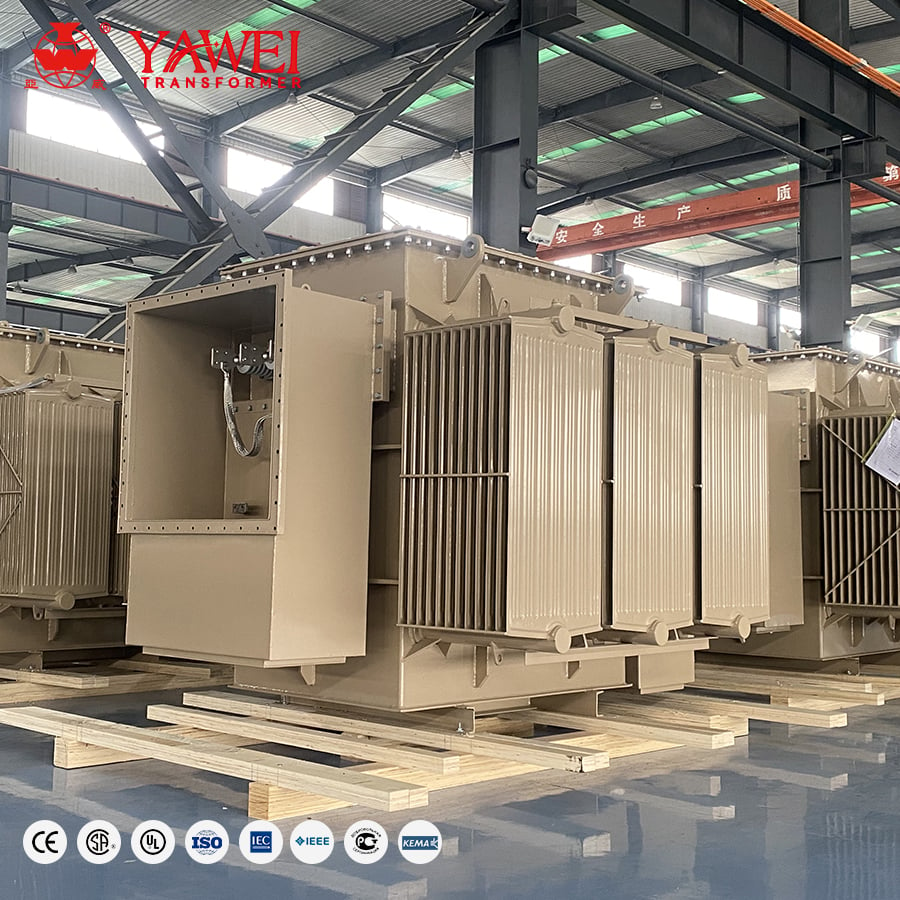
An incomplete power transformer RFQ creates three predictable costs. First, quotation comparison breaks down: if impedance, losses, taps, and cooling are not fixed, suppliers are pricing different engineering assumptions, so the lowest number may simply reflect the least content. Second, acceptance risk rises: undefined impedance or temperature-rise limits invite disputes when tests are run, because there is no agreed figure to test against. Third, lifecycle cost is hidden: an RFQ that ignores loss capitalization encourages loss-heavy designs that save money once and cost money continuously. The remedy is the same in every case — state the requirement, state the tolerance, and state the reference standard and test method, so that the offer and the finished unit answer the same specification. A complete power transformer RFQ also protects the buyer during negotiation, because a supplier cannot later argue that a low price reflected a deliberately reduced scope when the scope was fixed in writing from the outset.
A Real Project Reference
A publicly documented project that illustrates the value of a precise power transformer RFQ is Yawei's 132 kV power transformer supplied for the substation of a steel factory in Seville, Spain. The official project page notes that the unit was used in a steel-plant substation and references the large electric-arc-furnace load scenario. A load of that kind imposes demanding electrical and thermal conditions, which is exactly why the ratings, impedance, loss guarantees, tap arrangement, and cooling and site conditions must all be defined before quotation rather than negotiated during manufacturing. The project demonstrates that a complete power transformer RFQ is not paperwork — it is the mechanism that aligns a supplier's design with the real duty the transformer will face.
Power Transformer RFQ Checklist
Before issuing the inquiry, confirm that the document specifies: rated capacity and the high-voltage and low-voltage ratios; the vector group and frequency; short-circuit impedance with tolerance; guaranteed no-load loss and load loss with the reference temperature and measurement method; the tap-changer type, tap range, and tapping steps, plus the tap position defining rated voltage; the cooling method; temperature-rise limits; and the site conditions including ambient temperature range, altitude, humidity, and any seismic or environmental requirements. Confirm also that losses will be capitalized using an agreed formula, that the applicable standard and edition are named, and that the test plan and documentation are defined. A power transformer RFQ built on these fields produces comparable offers on the first pass and a low-risk acceptance process later. Record every field on a single technical datasheet issued with the inquiry, so that each supplier's figures can be read side by side and any deviation is visible immediately rather than buried in a multi-page proposal.
When preparing the technical baseline, review the published ratings and parameters on our power transformer page and compare tap and impedance data for an 220 kV on-load voltage regulating transformer.
Final RFQ Consistency Review
Before releasing the enquiry, perform a line-by-line consistency review. Confirm that the one-line diagram, equipment schedule, datasheet, loss schedule, accessory list, site data, and commercial scope use the same ratings and terminology. If the required impedance, loss capitalization factors, temperature limits, or tap schedule are still undecided, identify them as buyer inputs rather than allowing each bidder to make a different assumption.
The RFQ should also state the document hierarchy and deviation process. Suppliers need to know which specification governs if the datasheet conflicts with a general clause, how deviations must be listed, and which drawings require approval before manufacturing. A clear clarification log, revision register, and responsibility matrix improve quotation comparability without inventing technical requirements. The final transformer design remains subject to the approved project specification and manufacturer confirmation.
Quality Assurance & Standards Notes
A power transformer RFQ converts commercial intent into enforceable technical requirements, and its quality depends on naming standards precisely. Published Yawei oil-immersed data cite IEC 60076, and the manufacturer states that its products can comply with IEC, IEEE, ANSI, CSA, and EN, and that its 10 kV and 35 kV distribution transformers and substations hold IEC, UL, TUV, CE, KEMA, and GOST certifications, with testing performed at the National Transformer Quality Supervision & Inspection Center, CEPRI Wuhan, and the Suzhou Electrical Apparatus Research Institute. For the RFQ, three distinctions should be observed: system certifications such as ISO 9001, ISO 14001, and ISO 45001 (which Jiangsu Yawei Transformer holds alongside SA8000 and a Jiangsu enterprise metrology certification) describe the factory's management processes; product certifications describe an assessed product type; and third-party test reports document measured results on a defined sample. The RFQ should therefore reference the required standards and editions, require the corresponding certificate and test evidence, and state the acceptance criteria — including guaranteed losses and impedance — clearly enough that the delivered transformer can be checked against them. A disciplined power transformer RFQ is, in the end, the document that makes every later guarantee testable.
Table of Contents
- Ratings: Capacity, Voltage Ratio, and Vector Group
- Impedance and Losses: The Numbers That Decide Lifecycle Cost
- Tap Changers: Type, Range, and Steps
- Cooling, Temperature Rise, and Site Conditions
- Why an Incomplete Power Transformer RFQ Costs Money
- A Real Project Reference
- Power Transformer RFQ Checklist
- Final RFQ Consistency Review
- Quality Assurance & Standards Notes