
 EN

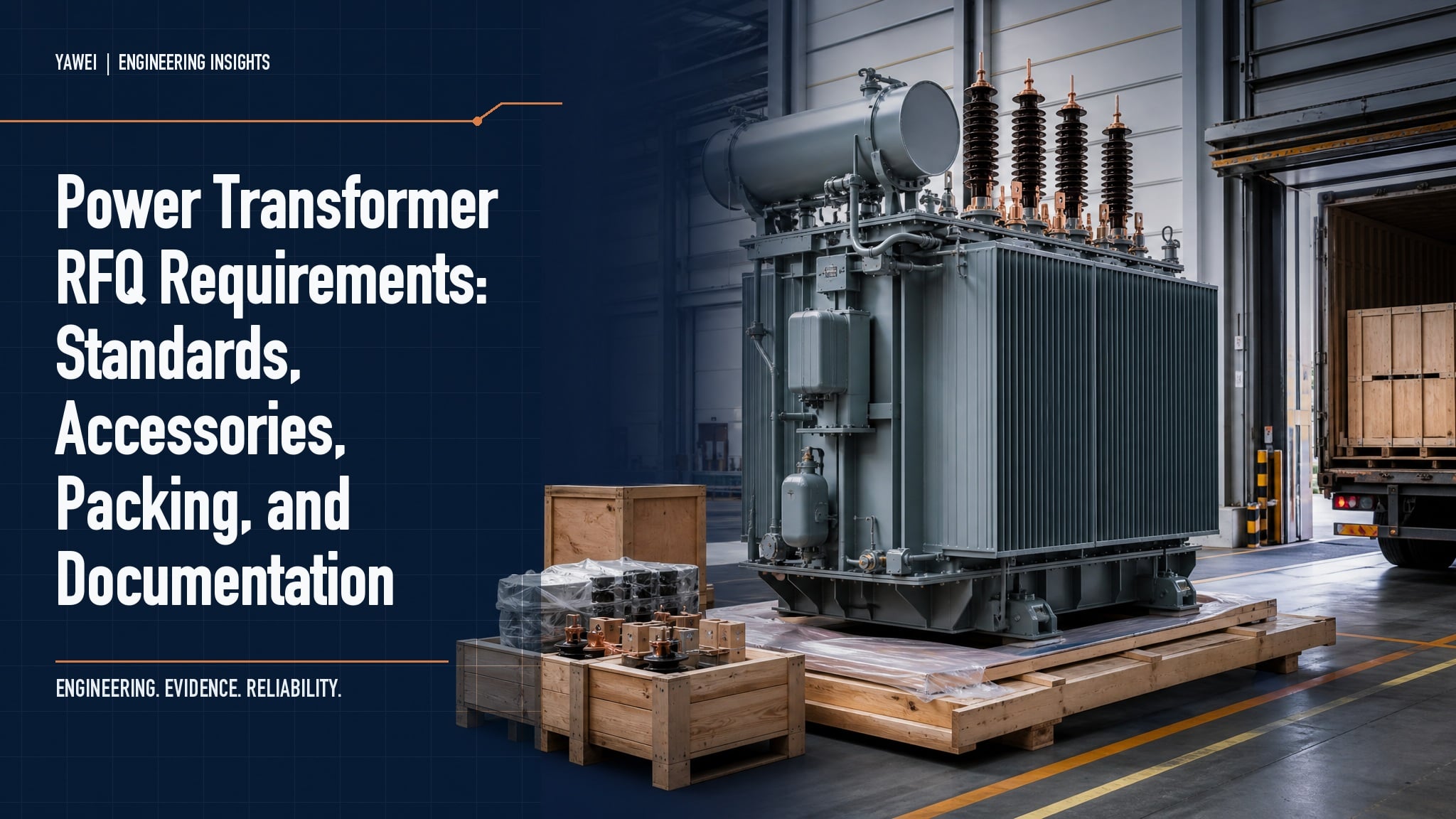
A power transformer is one of the largest capital items in a substation or distribution project, and the request for quotation (RFQ) is the document that fixes almost every technical and commercial expectation before a contract is signed. Well-structured transformer RFQ requirements remove ambiguity, protect the buyer during acceptance testing, and give every supplier a fair, identical basis on which to quote. This article explains how to specify standards and test certificates, accessories and monitoring instruments, packing and transport, accompanying documentation, and the commercial clauses that keep a project out of dispute. It is written for utility buyers, EPC contractors, and industrial project owners who need a repeatable template rather than a one-off shopping list.
Why transformer RFQ requirements decide project outcomes
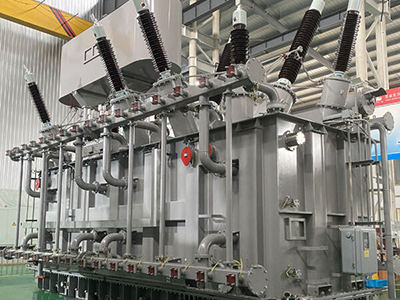
An RFQ is not simply a priced specification. It is the boundary of the contract. When transformer RFQ requirements are vague, suppliers interpret them differently, and the mismatch surfaces late — during type-test review, factory acceptance testing (FAT), or site commissioning — when correcting course is expensive. When they are precise, the buyer can compare offers on the same footing and the supplier can engineer the unit correctly the first time.
The three pillars this article covers are deliberately commercial as well as technical: first, the standards and test certificates that define acceptability; second, the accessories that define supply scope; and third, the packing, documentation, and delivery terms that decide whether the equipment arrives complete and whether a claim can be proven. Together they answer the questions buyers ask most often: "Will it comply?", "What exactly is included?", and "If something goes wrong, what do I have to prove?" Consistent transformer RFQ requirements let buyers compare competing offers line by line instead of guessing at what each supplier assumed.
Standards and test certificates
The RFQ should reference the standards the transformer must satisfy. Yawei states that its products can be manufactured to comply with IEC, IEEE, ANSI, CSA, and EN, and it lists IEC, UL, TUV, CE, KEMA, and GOST certifications for its 10 kV and 35 kV distribution transformers and compact substations, with products tested at national testing centres. That breadth is useful only if the buyer names the exact edition and scope rather than writing "to international standards".
A practical standard clause names the primary design standard (for example IEC 60076, IEEE C57, or the national code of the project country), the applicable edition or year, and any local deviations. It also defines the required test certificates: routine tests for every unit, type tests on the design, and third-party or independent certification where the market demands it. For compliance with IEC 60076, buyers should request type-test reports issued by an internationally recognised laboratory covering losses, temperature rise, short-circuit withstand, dielectric withstand, and impulse, and should verify the report number, standard edition, covered voltage and capacity, and validity.
Because transformer RFQ requirements are the first point at which certification scope is fixed, it is worth stating explicitly how many certificate copies are required, in what language, and whether the buyer wants the certificate number, issuing body, and validity period documented at quotation. This prevents a supplier from assuming a generic catalogue certificate satisfies a market-specific conformity requirement. Certification, product testing, and standard compliance are three different things, and a good RFQ keeps them separate. Precise transformer RFQ requirements on standards and certificates are what keep acceptance testing objective and evidence-based.
Accessories, bushings, arresters, and instruments
Every accessory that is excluded becomes a variation order later. For bushings, surge arresters, instruments, and ancillary fittings, the RFQ should carry an explicit accessory schedule with technical requirements and supply scope, covering at minimum:
- Bushings: type, voltage and current rating, creepage distance, and material.
- Surge arresters: voltage rating, protection level, and mounting position.
- Monitoring instruments: oil temperature, oil level, pressure, and winding temperature indicators.
- Accessory items: cooling equipment and fans, tap changer, breather, pressure relief valve, and grounding provisions.
Because published materials do not disclose a standard accessory list, the technical parameters and quantities must be defined at the enquiry stage. The safest approach is to require the supplier to return a completed accessory table against each RFQ line, marking each item as included, optional, or excluded, so the scope gap is visible before award. Transformer RFQ requirements that specify accessories item by item also make later spare-part planning far easier, because the buyer knows exactly which components are standardised on the unit. Detailed transformer RFQ requirements for accessories turn an ambiguous "standard fittings" line into a verifiable supply schedule.
Packing, transport, and site delivery
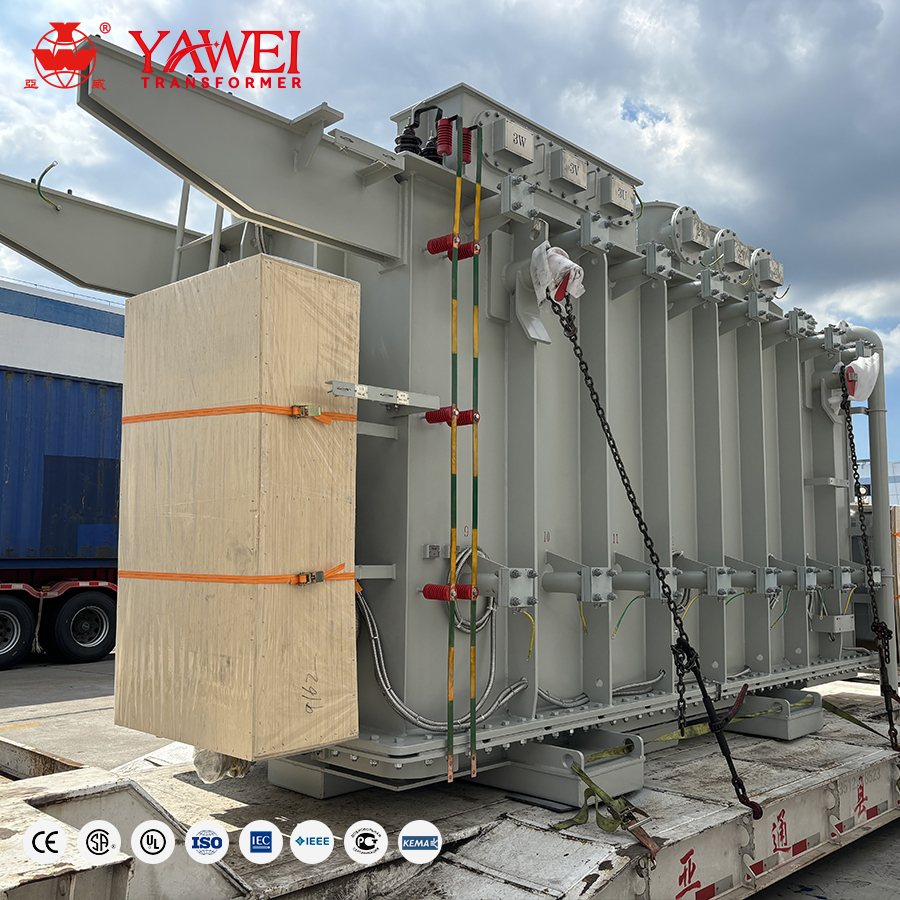
Transformers travel long distances, often by sea, and arrive at sites with limited lifting equipment. Packing therefore deserves its own clause. The RFQ should state the packing specification, the required moisture and vibration protection, and the method of securing for sea freight. Buyers should specify whether the unit ships with oil or dry (nitrogen-filled) and who is responsible for oil filling and testing on arrival, because these decisions affect both cost and risk.
Because public materials do not disclose Yawei's specific packing standard, the correct move is not to assume one. Instead, the buyer should write the packing, protection, and securing requirements into the RFQ template and require the supplier to confirm compliance in the offer. The clause should also define the delivery-term basis — for example FOB, CIF, or delivered — and identify the point at which risk transfers, so that insurance and damage claims are unambiguous. Well-written transformer RFQ requirements treat packing as an engineering deliverable rather than a shipping afterthought.
Delivery documents and acceptance criteria
A transformer is only contract-complete when its documentation is complete. The RFQ should list the accompanying documents the supplier must provide, including test reports, installation and operation manuals, drawings, certificates, the packing list, and customs or export documentation. It should also define acceptance standards: what is inspected on arrival, what is verified against the FAT records, and what constitutes a non-conformity.
The materials do not disclose Yawei's standard document package, so these terms should be stated in the RFQ or contract template and confirmed by the supplier. Making documentation explicit within the transformer RFQ requirements has a second benefit: it forces the buyer to decide, before award, who is responsible for translation, customs classification, and any market-specific labelling. Buyers who leave documents implicit often discover the gap only when the equipment is already in transit.
Commercial terms that prevent disputes
The RFQ should set out the commercial and contractual terms that decide how a delay or defect is handled:
- Delivery terms: the starting point of the lead time, whether partial or full shipment is allowed, and how delay is treated, including liquidated damages.
- Quality and acceptance: the acceptance standard and the warranty terms, stated clearly enough to be enforced.
- Payment and currency: the milestones and the payment instrument, so cash-flow risk is understood by both sides.
Here again, published materials do not disclose specific terms, so they should be written into the contract or RFQ template and confirmed by the supplier. A buyer who specifies these clauses once can reuse them across an entire transformer programme, which is why mature utilities keep a standing RFQ template and adjust only project-specific lines. Clear transformer RFQ requirements on these points are what make a delay or defect claim enforceable rather than a matter of goodwill.
A worked framework for transformer RFQ requirements
The table below is a compact checklist that can be dropped into a template. It is a framework, not a set of values — every entry should be filled with project data.
Treating transformer RFQ requirements as a reusable template, rather than rewriting them per tender, is the single most effective way to reduce acceptance disputes. A single maintained template also keeps transformer RFQ requirements consistent across every package in a multi-substation programme.
Application example: an 110 kV substation in Mongolia
Yawei's published project portfolio includes the design, supply, and installation of an 110 kV substation project for the Mongolian Power Transmission Company. The company notes that the climate in Mongolia is extremely harsh and that the extreme cold in winter posed a significant challenge. For a buyer drafting an RFQ, this kind of project is a useful reminder of why environment-specific requirements belong in the enquiry: cold-climate operation affects insulation, oil behaviour, sealing, and site handling, and it should be reflected in the standard clause, the accessory schedule, and the packing and transport section rather than left to the supplier's assumption.
Common mistakes in transformer RFQ requirements
Three mistakes recur. The first is naming a standard without an edition, which makes acceptance subjective. The second is describing accessories by category ("with standard fittings") instead of by schedule, which invites scope gaps. The third is treating packing and documentation as afterthoughts, when both are common sources of claims. Each mistake has the same root cause: a requirement that is implied rather than written. Strengthening transformer RFQ requirements in these three areas is inexpensive at tender stage and expensive to fix afterwards.
How these requirements connect to selection and delivery
A strong RFQ does not stand alone. It should align with the selection logic used earlier in the project — capacity, voltage, impedance, and cooling chosen for the site — and with the delivery capability that will execute the order. Buyers comparing suppliers benefit from reviewing the power transformers range and the broader product family before fixing the standard clause, and from understanding how a supplier's services support international delivery. When the technical, commercial, and documentation sections of the RFQ point in the same direction, the tender becomes easier to evaluate and the contract easier to administer.
For oil-immersed projects, buyers should also confirm the tank, cooling method, and oil-treatment responsibilities, because these interact directly with the packing and site-delivery clauses. Transformer RFQ requirements that ignore these interfaces tend to produce late variations.
Summary
Specifying transformer RFQ requirements precisely — standards with editions, accessories as a schedule, packing and transport with named responsibilities, documents as a deliverable, and commercial terms as enforceable clauses — turns a quotation into a controllable contract. The buyer who invests an afternoon in a good template avoids months of variation and dispute. In short, transformer RFQ requirements are the cheapest risk control available in a transformer project, and the framework above is a starting point whose values always come from the project itself.
Quality Assurance & Standards Notes
- Yawei's published management-system certificates include ISO 9001, ISO 14001, and ISO 45001; the customer information form additionally lists SA8000 and the Jiangsu Province enterprise metrology qualification. Buyers should verify each certificate's subject, number, issuing body, validity, covered products, and market before publishing or relying on it.
- Yawei's materials state that its 10 kV and 35 kV distribution transformers and compact substations hold IEC, UL, TUV, CE, KEMA, and GOST certifications, and that products are tested at national testing centres. Products can be manufactured to comply with IEC, IEEE, ANSI, CSA, and EN. Certification, product testing, and standard compliance should not be treated as interchangeable.
- Packing specifications, the standard document package, delivery terms, liquidated damages, and warranty terms are not disclosed in public materials. These must be stated in the RFQ or contract and confirmed by the supplier before award.
- All figures, test requirements, and accessory scopes in an RFQ should be defined per project and verified against the latest quotation, contract, and certificate copies.
Table of Contents
- Why transformer RFQ requirements decide project outcomes
- Standards and test certificates
- Accessories, bushings, arresters, and instruments
- Packing, transport, and site delivery
- Delivery documents and acceptance criteria
- Commercial terms that prevent disputes
- A worked framework for transformer RFQ requirements
- Application example: an 110 kV substation in Mongolia
- Common mistakes in transformer RFQ requirements
- How these requirements connect to selection and delivery
- Summary
- Quality Assurance & Standards Notes